
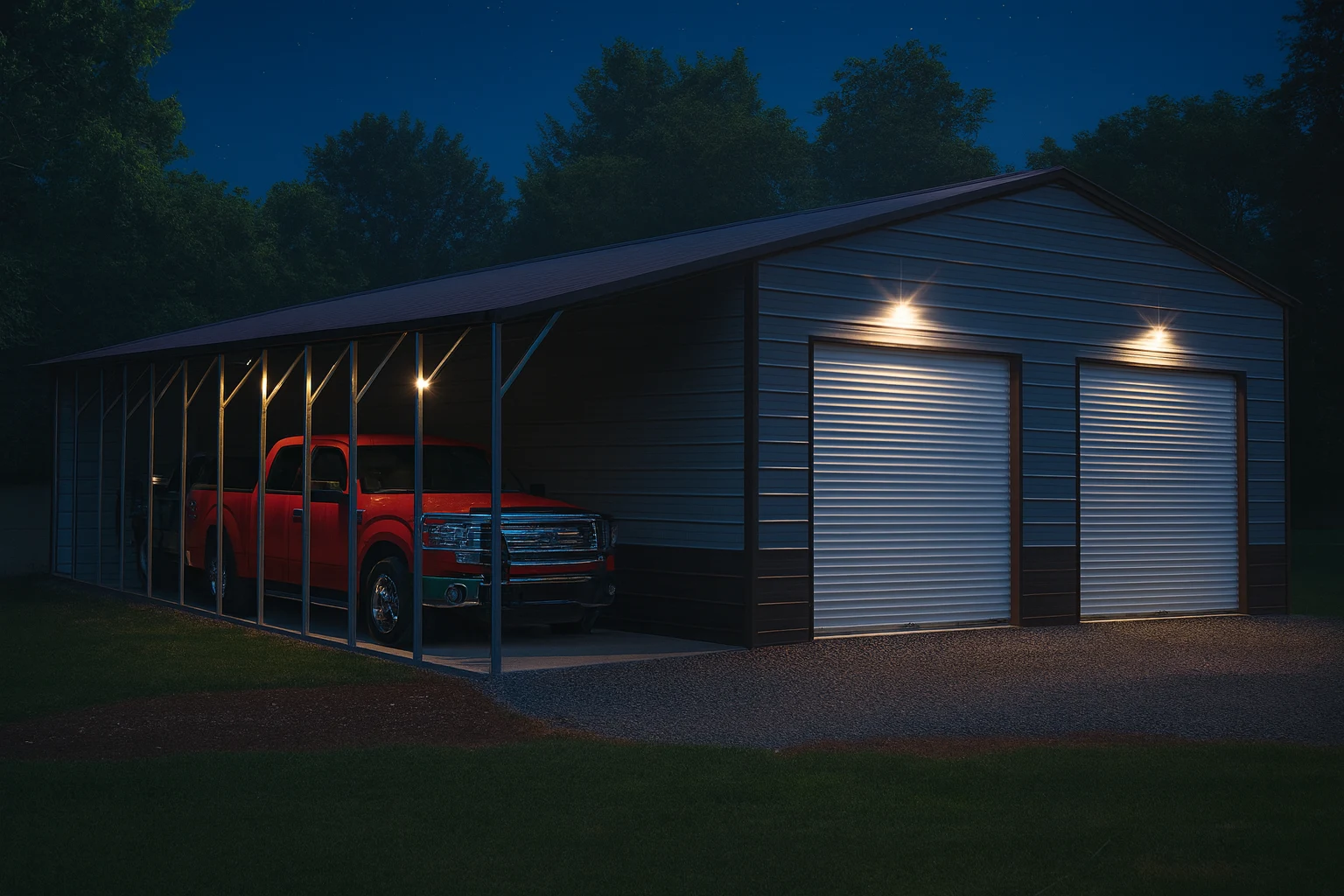
What Is a Steel Building?
A steel building is a pre-engineered structure made from galvanized steel framing and metal panels. Steel buildings are manufactured in a factory to exact specifications, then delivered and assembled on-site — typically in just days. They are used for garages, barns, workshops, warehouses, and commercial facilities across the United States.
Unlike traditional wood-frame construction, steel buildings are designed to resist fire, pests, rot, and extreme weather. They require virtually no maintenance and can last 40–60+ years, making them the preferred choice for property owners who want long-term value.
What Is a Wood-Frame Building?
A wood-frame building is built stick by stick on site. Dimensional lumber forms the walls and roof trusses, sheathing goes over the frame, and the structure is finished with siding and roofing — usually asphalt shingles. Pole barns are a variation: instead of a continuous foundation, large posts are set directly into the ground and the frame is built off them.
Wood construction is familiar to every contractor in the country, which is its biggest practical advantage. Materials are available at any lumberyard, and modifications are simple to make with ordinary tools. It's also site-built, meaning weather delays and labor availability directly affect your timeline in a way they don't with a factory-built structure.
How Do Steel and Wood Buildings Compare?
Here's a detailed, category-by-category comparison of steel vs wood buildings.
| Category | Steel Building | Wood Building |
|---|---|---|
| Upfront Cost | ✓ 30–50% lower than wood-frame | ✗ Higher material and labor costs |
| Lifespan | ✓ 40–60+ years with minimal maintenance | ✗ 20–30 years before major repairs |
| Maintenance | ✓ Near-zero: no painting, no pest treatment | ✗ Regular painting, sealing, pest control |
| Fire Resistance | ✓ Non-combustible, won't ignite | ✗ Highly flammable |
| Pest Resistance | ✓ Immune to termites and rodents | ✗ Vulnerable to termites, carpenter ants |
| Construction Speed | ✓ Days to weeks (prefabricated) | ✗ Weeks to months |
| Wind Resistance | ✓ Certified up to 170 mph | ✗ Typically rated 90–110 mph |
| Environmental Impact | ✓ 100% recyclable | ✗ Requires harvesting trees |
| Aesthetic Warmth | ✗ Industrial look (customizable) | ✓ Natural warmth and character |
| DIY Friendly | ✗ Requires professional installation | ✓ Easier for small DIY projects |
What Each One Actually Costs
Cost is where most buyers start, and it's where the comparison is most often oversimplified. Steel pricing moves with the commodity market, so treat these as ranges rather than quotes.
Steel buildings typically run $10–$25 per square foot installed for tube-frame garages, carports, and barns. That figure usually includes the building, delivery, and installation on a prepared site. Larger red-iron commercial structures run higher.
Wood-frame construction typically runs $30–$60 per square foot, and that's before you add roofing, painting, and the labor premium that comes with a longer build. Pole barns land in between at roughly $20–$40 per square foot and narrow the gap considerably — which is why they're the honest competitor to a steel building, not stick-built construction.
The number that matters more is cost over time. A wood structure needs repainting or resealing every 5–7 years, pest treatment on an ongoing basis, and shingle replacement roughly every 20 years. A steel building with a galvanized frame and a factory finish needs washing. Over a 30-year window, that maintenance gap frequently exceeds the entire original price difference.
For a full breakdown of what drives steel building pricing, see How Much Does a Metal Building Cost?
Lifespan and Maintenance
Steel doesn't rot, warp, twist, or feed insects. A galvanized frame resists rust for decades, and most manufacturers back the frame with a 20-year rust-through warranty. Panels carry their own finish warranty covering chalking and fade.
Wood's failure modes are all moisture-driven. Water gets in at a joint, at a fastener, or at ground contact, and decay starts. Termites and carpenter ants find their way to any untreated lumber eventually. None of this makes wood a bad material — it makes it a material that requires attention. If you'll give it that attention, wood lasts. If the building is going to sit at the back of a property and get looked at twice a year, steel is the safer bet.
Where Wood Actually Wins
We sell steel buildings, so take this section as the honest part rather than the sales part. Wood is the better choice in several real situations:
Small DIY projects. A 10x12 garden shed you want to build yourself over a weekend is a wood project. Steel buildings are engineered systems that expect professional installation.
Finished living space. If you're building a guest house or an addition that needs to match your home's architecture down to the trim, wood framing is more forgiving to a carpenter working on site.
Heavily restricted neighborhoods. Some HOAs and historic districts specify materials and rooflines that a metal building can't meet, no matter how you dress it up.
Tight or inaccessible sites. Steel buildings arrive on a truck that needs 10–12 feet of clear access and room to turn around. A crew with lumber can walk material into a backyard.
Frequent structural modification. If you expect to cut new openings, move interior walls, and reframe repeatedly, wood is easier to change with ordinary tools.
Insurance, Financing, and Resale
Three practical differences that rarely make it into comparison articles:
Insurance. Non-combustible construction often earns a lower premium. Ask your carrier directly — the difference varies by region and by carrier, but it's worth a phone call before you decide.
Financing. Both are financeable, though the products differ. Steel buildings are frequently financed through the dealer via equipment or structure-specific lenders rather than a construction loan. See our financing options.
Resale. A steel workshop or garage adds usable square footage and reads as an asset to a buyer. The aesthetic objection is real but shrinking, and it's largely solvable with color, trim, and wainscot choices rather than material choices.
How to Decide
Four questions settle it for most people:
What goes inside? Vehicles, equipment, and inventory point to steel. Finished living space points to wood.
How long do you need it? Under 15 years, either works. Over 30, the maintenance math favors steel heavily.
Who maintains it? Be honest. Wood requires an owner who will keep after it.
What does your county and HOA allow? This can decide it before anything else does. Start with what requires a permit.