
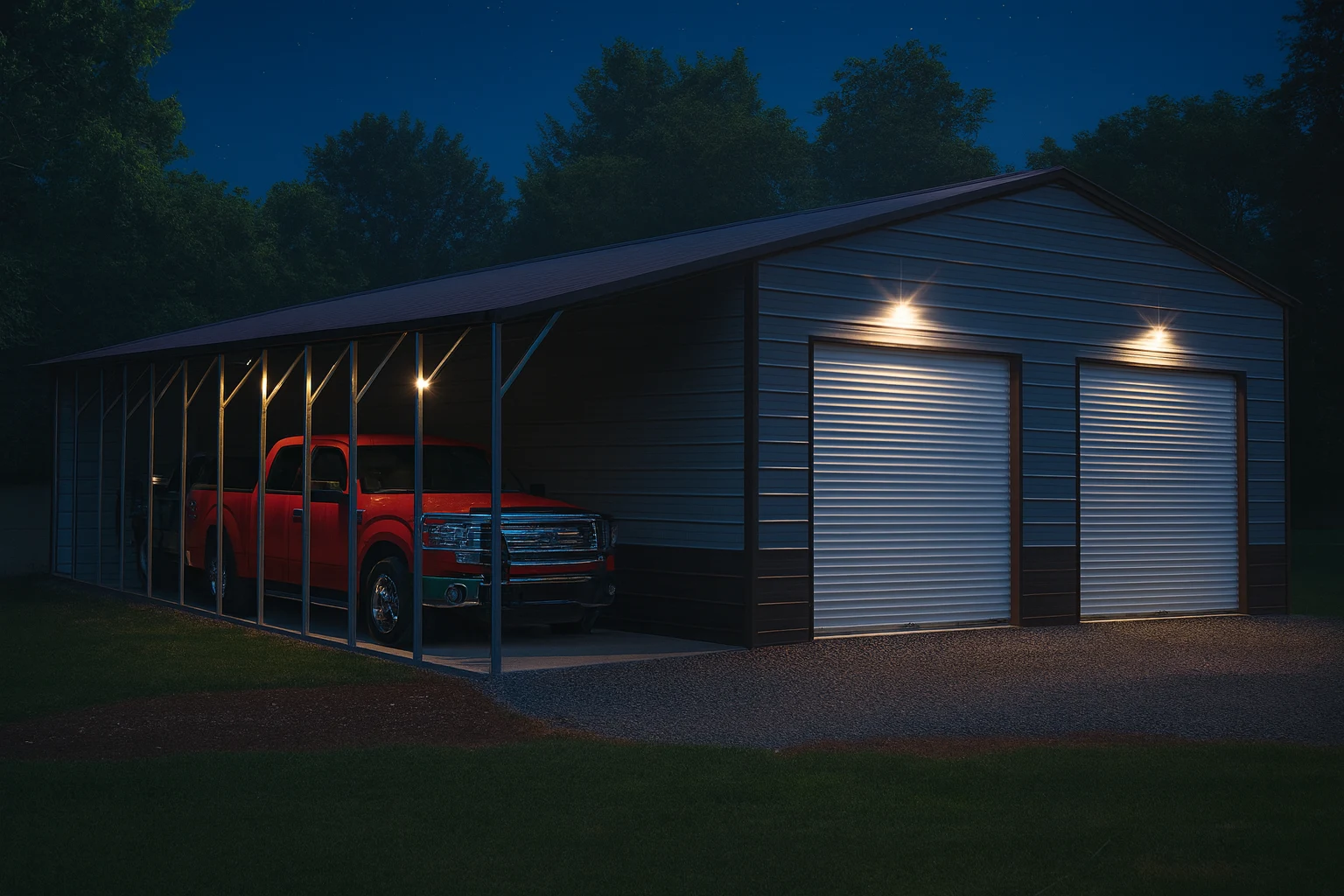
A shed is a storage box. A garage is an engineered structure rated for wind and snow, usually permitted, usually anchored to a real base, and built to shelter vehicles. Size overlaps between them; that isn't what separates them. Engineering and permitting are.
The Real Difference
Sheds are typically sold as consumer products — prefabricated units, sometimes kits, generally not engineered to a wind or snow rating for your address. They often fall under permit exemption thresholds by design.
Metal garages are engineered structures. A certified garage ships with stamped drawings rated for local loads, gets permitted, and anchors to ground, gravel, or concrete per that engineering.
That difference shows up in cost, in what the county says, and in whether the structure counts toward your property's appraised value.
Side by Side
| Metal Shed | Metal Garage | |
|---|---|---|
| Cost per sq ft | ✓ Lower | ✗ Higher |
| Engineered to local loads | ✗ Usually not | ✓ Yes, when certified |
| Typically permitted | ✓ Often exempt | ✗ Usually required |
| Vehicle storage | ✗ Not designed for it | ✓ Yes |
| Adds appraised value | ✗ Typically no | ✓ Usually |
| Lifespan | ✗ Shorter | ✓ 40–60+ years |
| Can be insulated | ✗ Rarely worthwhile | ✓ Yes |
| DIY assembly | ✓ Often | ✗ Professional install |
| Doors sized for vehicles | ✗ No | ✓ Yes |
When a Shed Is the Right Call
We sell garages, so treat this as the honest section. A shed wins when:
- You're storing hand tools, lawn equipment, and seasonal items and nothing else
- The footprint is under about 200 square feet, where garage engineering doesn't amortize well
- You want to stay under your permit threshold and keep the project simple
- Budget is the binding constraint and the alternative is nothing
- The structure is temporary or you may relocate it
If you're covering a push mower and a set of rakes, don't buy a garage.
When You Need a Garage
Anything with wheels and a title. Vehicles need door width, height, and a floor that won't rut.
A workspace. Sheds aren't built to be occupied, insulated, or wired.
Valuable contents. Engineering matters when the thing inside is worth more than the structure.
Appraised value. A permitted garage on a permanent base generally counts as an improvement. A shed generally doesn't.
Snow or high wind. This is the one that matters most. An unrated structure in a real snow load is a liability, and the failure usually comes at the worst possible time.
The Middle Ground
If a shed is too small and a full garage is too much, two options split the difference:
An open or partially enclosed structure. A carport with gable ends and one closed side costs far less than full enclosure while still sheltering equipment properly.
A smaller certified garage. A 20x20 engineered building costs more per square foot than a 30x40, but it's a real structure with a real rating and it can be permitted.
Cost in Context
Sheds are cheaper up front, and the gap is real. But run the comparison honestly: a shed replaced twice over thirty years, storing items a garage would have protected better, on a property where it added nothing to appraised value, is not obviously the cheaper decision.
For the numbers on garages, see metal building cost. For the decision framework across all structure types, see choosing the right metal building.